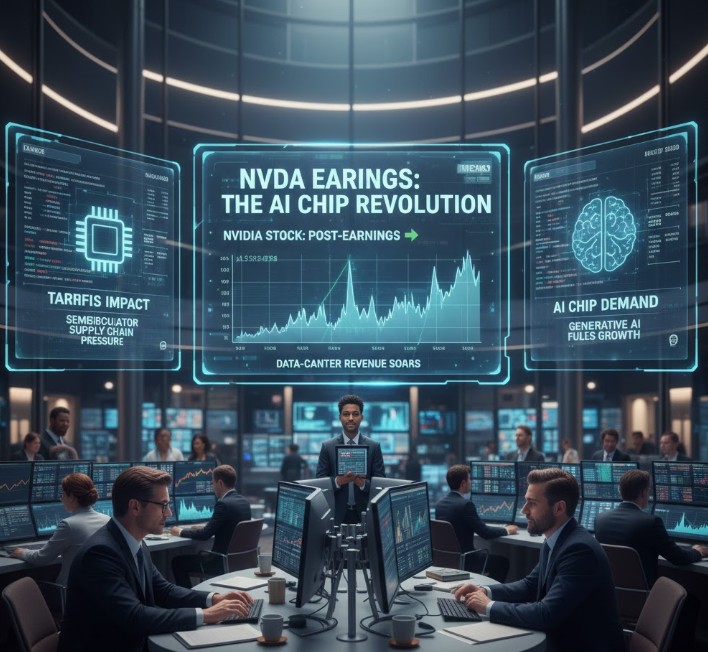
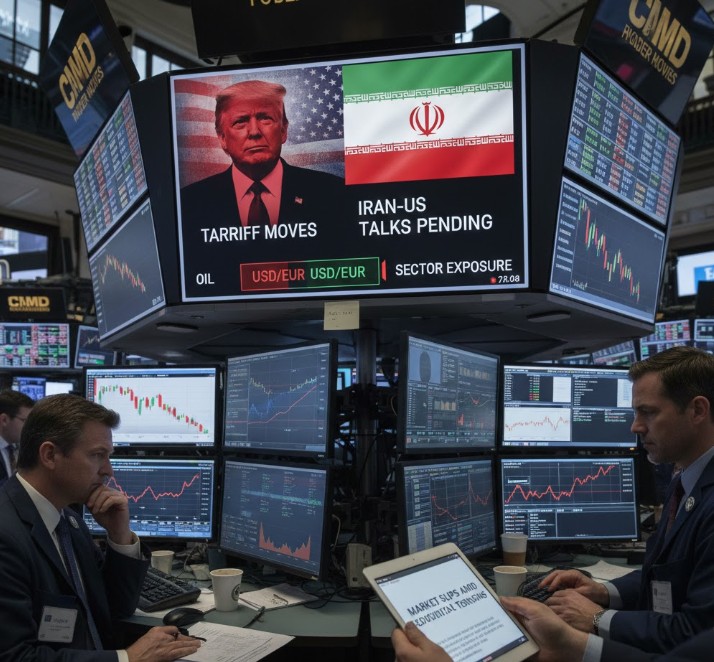
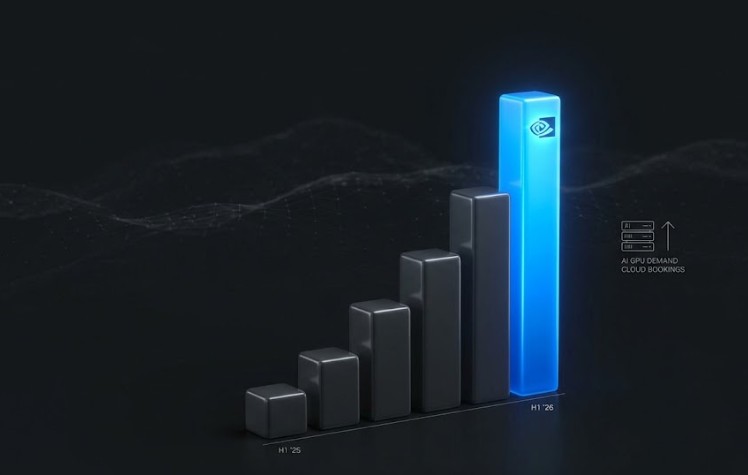
Trump Hikes Global Tariff to 15%; Dow Futures Slip, Nvidia Earnings
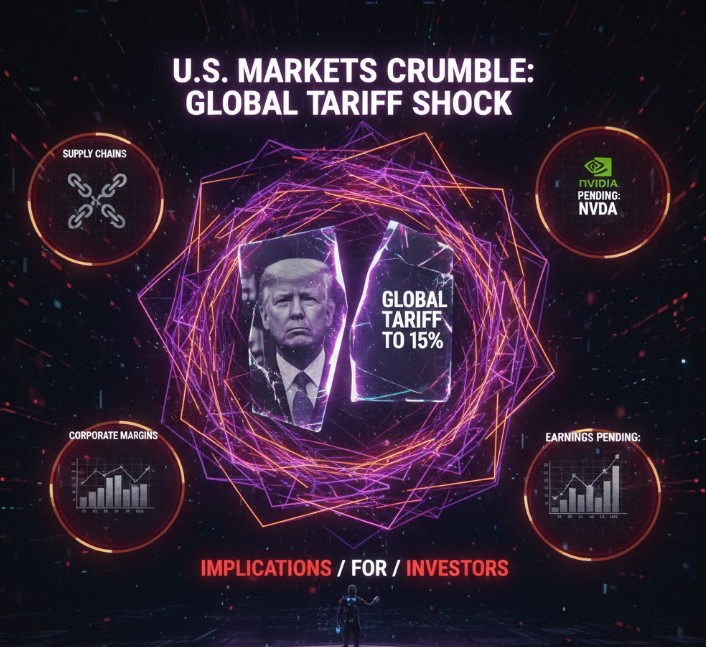
Dow Futures
Slide After 15% Global Tariff; Nvidia Earnings in Focus
President Trump’s decision to raise a new
global tariff to 15% on Saturday jolted markets, sending Dow Jones futures
lower and erasing earlier intraday gains.
The move heightened trade-policy uncertainty
just days before Nvidia (NVDA) reports quarterly results, increasing investor
focus on guidance and demand for artificial intelligence–linked chips.
Nvidia’s
Market Influence
Nvidia has been a central market driver over
the past year as the leading supplier of GPUs for AI training and data-center
workloads.
The company’s shares have:
- Powered
substantial gains in the Nasdaq
- Helped
underpin broader market rallies
- Become
a key risk factor for major indexes
Investors are closely monitoring:
- Unit
growth
- Data-center
revenue
- Gross
margin trajectory
- Management
commentary on enterprise demand
- Supply-chain
dynamics
Given Nvidia’s index weight and influence, its
earnings cadence represents an outsized catalyst for broader markets.
Tariff
Shock and Market Reversal
The tariff announcement disrupted positive
momentum that had followed a separate court ruling earlier in the week, which
initially buoyed equities on hopes of regulatory clarity.
Markets rallied briefly, but the introduction
of a 15% global tariff reintroduced concerns about:
- Higher
input costs
- Cross-border
trade frictions
- Potential
retaliatory measures
These concerns are especially acute for
technology firms dependent on complex global supply chains for components and
manufacturing.
Direct
Risks to Nvidia
The tariff presents two immediate risks for
Nvidia:
1. Margin
Pressure
Higher tariffs can increase the landed cost of
components and finished systems incorporating Nvidia’s chips. If companies
cannot pass these costs to customers, gross margins may compress.
2. Order
Timing Risk
Tariffs raise execution uncertainty for
multinational customers and cloud providers that make long lead-time purchasing
decisions. This could lead to:
- More
cautious procurement behavior
- Delays
in high-end accelerator orders
Broader
Macroeconomic Implications
Beyond direct cost effects, the tariff shift
increases macro uncertainty.
Historically, semiconductor capital
expenditures are sensitive to business-cycle expectations. When enterprises
delay data-center upgrades or infrastructure investments, GPU and accelerator
orders can slow.
Given that Nvidia’s data-center segment
accounts for a substantial share of revenue, any retrenchment in corporate
spending would be closely scrutinized.
Market
Reaction and Analyst Perspective
Monday’s reaction was swift but measured:
- Dow
futures trimmed earlier gains and moved lower
- Cyclical
sectors most exposed to global trade faced pressure
- Technology
stocks showed varied responses based on pricing power and supply-chain
exposure
Analysts avoided sweeping conclusions but
emphasized the interaction between policy shocks and company-specific
fundamentals.
Several strategists noted that high-margin
technology firms with strong enterprise demand are better positioned to absorb
incremental tariff costs. Others pointed out that tariff regimes often evolve
through exemptions and negotiations, making implementation details critical.
Investor
Playbook: Actionable Steps
With tariff headlines and Nvidia’s earnings
converging, investors face dual catalysts this week.
1. Review
Hardware Exposure
Evaluate positions in companies with thin
margins and significant international sourcing, as they may be most vulnerable.
2. Focus on
Nvidia’s Commentary
Key areas to monitor:
- Order
momentum
- Revenue
mix between enterprise and consumer
- Pricing
power and margin resilience
3. Hedge
Short-Term Volatility
Consider:
- Reducing
short-term directional bets ahead of earnings
- Using
options strategies to hedge downside risk
- Trimming
exposure to highly cyclical suppliers
4. Maintain
Long-Term Discipline
Long-term investors should treat policy shocks
as part of a heightened volatility regime rather than grounds for wholesale
portfolio changes.
Key
Earnings Data Points to Watch
Short-term traders will focus on:
- Data-center
revenue growth
- Gross
margin trajectory
- Inventory
levels
- Channel
commentary for signs of order timing shifts
Any guidance reduction or cautious tone on
enterprise spending could trigger outsized reactions, particularly from
algorithmic and momentum-driven flows.
Forward
Outlook
Markets will seek clarity on three fronts:
- Whether
the tariff is broadly implemented or selectively enforced
- The
scale of retaliation or countermeasures from trade partners
- Nvidia’s
assessment of end-market demand
If tariffs remain in place and hyperscalers
moderate spending, negative effects could cascade through supply chains.
Conversely, resilient enterprise demand and margin strength at Nvidia could
offset policy-driven headwinds and support a rebound.
For now, elevated volatility is likely to
persist. Investors should emphasize:
- Careful
position sizing
- Active
risk management
- Close
analysis of earnings guidance
Dow futures fell after the unexpected 15% global tariff announcement increased trade-policy uncertainty and potential cost pressure ahead of key corporate earnings, particularly Nvidia’s highly anticipated report.