Robinhood The Trading Platform Reawakening Can It Sustain Its Momentum Through 2028?
Company Overview
Founded in 2013 by Vladimir Tenev and Baiju Bhatt, Robinhood
pioneered zero-commission trading, fundamentally disrupting traditional
brokerage models. Its easy-to-use mobile interface and gamified design
attracted millions of first-time investors, particularly during the 2020–2021
market boom.
Today, Robinhood has evolved far beyond simple stock trading. It now offers:
- Stocks,
ETFs, and Options trading
- Cryptocurrency
trading (BTC, ETH, DOGE, and others)
- Retirement
accounts and high-yield cash management
- Credit
and debit card products
- International
market access for select investors
This diversification has helped stabilize its revenue
streams and reduce its dependence on retail trading volatility.
The Growth Story: 2025–2028 Outlook
Robinhood’s recent transformation reflects a broader shift
in retail finance. The company’s renewed focus on product expansion, AI
integration, and international growth has set the stage for a potential
multi-year uptrend.
1. AI and Data-Driven Investing Tools
In 2025, Robinhood began integrating AI-based trade analytics and personalized
investment recommendations. These tools use user behavior and market data
to enhance trading decisions a move that aligns the platform with fintech
leaders like SoFi and eToro.
2. Institutional-Grade Features for Retail Investors
The firm’s roadmap includes expanding access to fractional IPO investing,
advanced charting tools, and tax-loss harvesting automation bridging the gap
between retail and professional-grade platforms.
3. Revenue Diversification and Balance Sheet Strength
Robinhood’s revenue model has evolved from reliance on payment-for-order-flow
(PFOF) to include:
- Interest
income from uninvested cash balances
- Margin
lending
- Subscription-based
premium accounts
- Cryptocurrency
transaction fees
With consistent cash flow and improved cost control,
Robinhood is positioned to navigate market volatility while maintaining
profitability.
Price Range and Market Performance
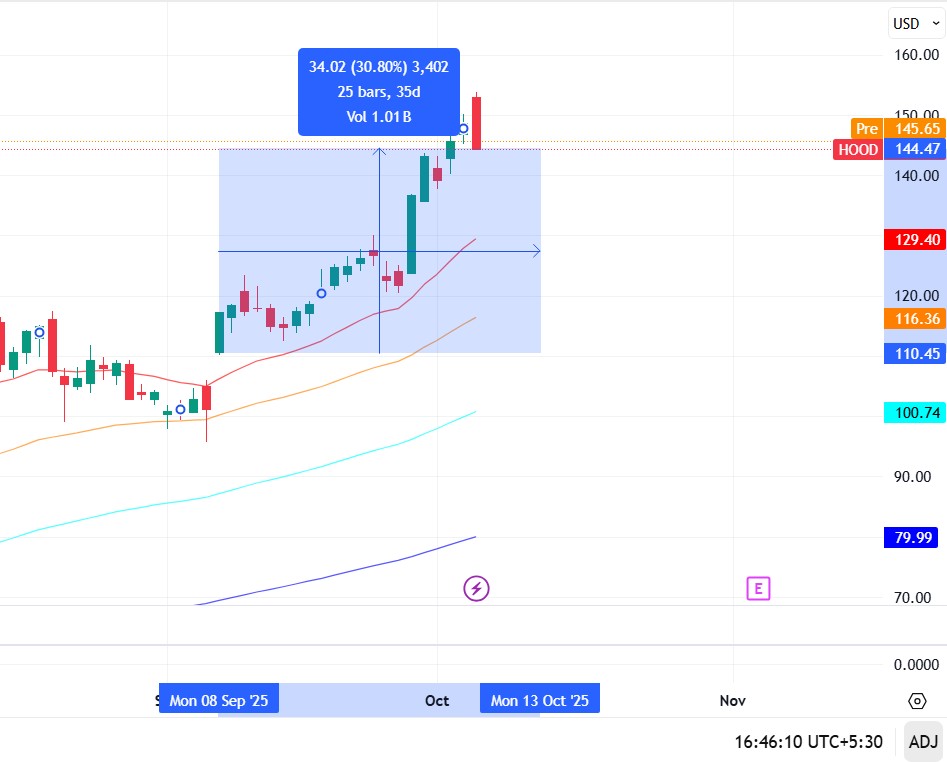
Between 2025 and 2028, analysts anticipate
Robinhood’s stock will trade within the $100 to $210 range, supported by
the following dynamics:
- Bullish
Scenario ($210 upper bound):
Successful international expansion, sustained retail trading activity, and crypto market growth could push HOOD toward the higher end of its projected range. - Base
Case ($140–$170 range):
Steady user base growth and rising ARPU (average revenue per user) maintain moderate valuation gains. - Bearish
Scenario ($100 support level):
Persistent regulatory headwinds or a slowdown in crypto volumes could cap gains and reintroduce volatility.
Fundamental Analysis
- Active
Users: 20+ million
- Revenue
Growth: 15–20% YoY driven by diversification
- Gross
Margins: Expanding due to reduced promotional costs and improved
monetization
- Debt
Profile: Low leverage provides strategic flexibility
- Cash
Position: Strong liquidity to support innovation and buyback programs
These fundamentals reflect a more stable, financially
disciplined organization than the speculative Robinhood of 2021.
Key Catalysts Ahead
- Crypto
Integration Expansion: Renewed interest in digital assets could
substantially lift trading volume and platform activity.
- Global
Market Entry: Robinhood’s planned entry into the UK and select Asian
markets opens new growth channels.
- AI
and Automation Tools: Enhanced personalization and portfolio
optimization features could attract new premium users.
- Macroeconomic
Tailwinds: A lower interest rate environment may stimulate equity
market participation, benefiting trading platforms like Robinhood.
Risks to Monitor
- Regulatory
Uncertainty: The PFOF model remains under scrutiny, and tighter
regulations could impact revenue margins.
- Market
Dependency: A major downturn in equity or crypto markets could reduce
user engagement.
- Competition:
Platforms like Webull, SoFi, and Fidelity’s free trading platforms
continue to intensify pressure.
Conclusion
Robinhood’s evolution from a commission-free disruptor to a
mature fintech enterprise marks a significant turning point. The company’s
strategic direction blending AI-driven personalization, diversified
product offerings, and international expansion suggests a strong
foundation for sustained growth.
While challenges remain, particularly around regulation and
market cycles, Robinhood’s trajectory between 2025 and 2028 positions it
as a high-risk, high-reward growth stock for investors who believe in
the democratization of finance.
If the company continues executing its roadmap effectively,
the $100–$210 price range could serve as a realistic reflection of its
evolving value over the next three years.