JPMorgan Leads Bank Earnings Week as Trading Helps Offset Risks
JPMorgan Chase & Co. (JPM) is at the
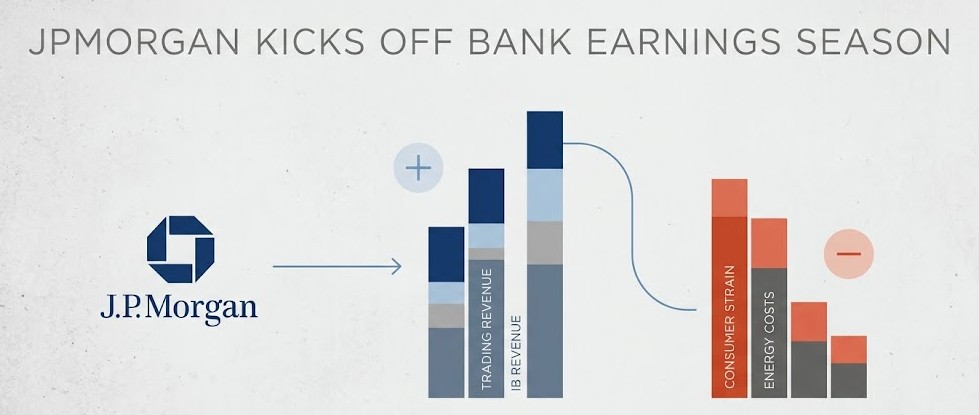
center of this week’s bank earnings season, with investors focused on whether
strong investment banking and trading results can offset mounting pressure on
consumers from rising energy costs. First-quarter results are expected to show
improved capital-markets revenue, though higher fuel and utility expenses could
weigh on credit performance and consumer spending.
Company
Background and Recent Performance
JPMorgan is the largest U.S. bank by assets
and a major bellwether for the financial sector. The company operates across
consumer banking, corporate and investment banking, commercial banking, and
asset management.
Over recent quarters, the bank has benefited
from higher interest rates and a steeper yield curve, which supported net
interest income. At the same time, periods of elevated market volatility have
strengthened trading revenue and capital-markets activity.
JPMorgan’s scale, liquidity, and reserve
position have historically helped the firm navigate macroeconomic uncertainty,
although its consumer businesses remain sensitive to inflation, employment
conditions, and energy prices.
Analysis of
the Current Situation
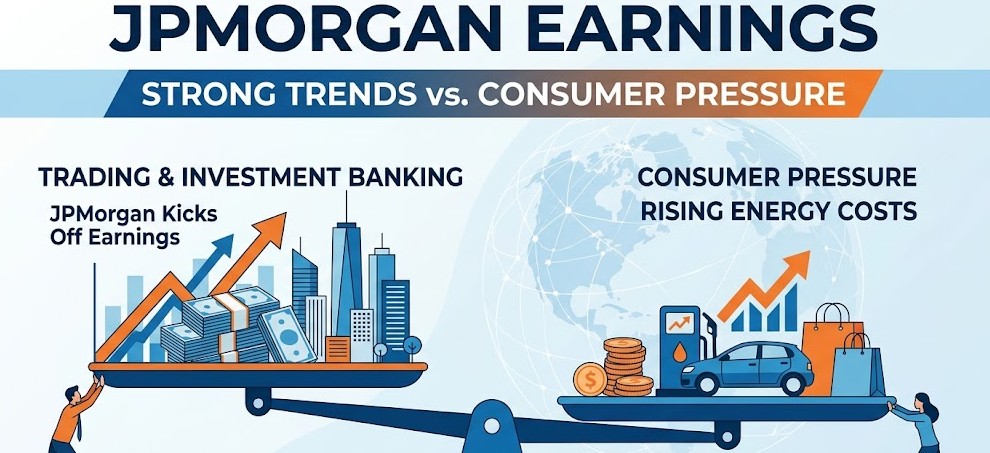
Analysts expect the quarter to reflect two
opposing trends: stronger capital-markets activity alongside growing consumer
pressure.
Investment banking fees and trading revenue
tend to improve when corporate deal activity and market volatility increase.
Equity issuance, debt underwriting, and merger advisory activity have shown
signs of recovery, which could support revenue growth for JPMorgan’s investment
banking division.
At the same time, higher oil, gasoline, and
utility costs can reduce discretionary consumer spending and increase stress on
household finances. Rising living costs may pressure credit card balances, auto
loans, and broader consumer credit quality.
For JPMorgan, this creates a mixed earnings
environment where gains from trading and advisory businesses could help offset
slower growth or weakness in consumer lending operations.
Key
Financial Areas to Watch
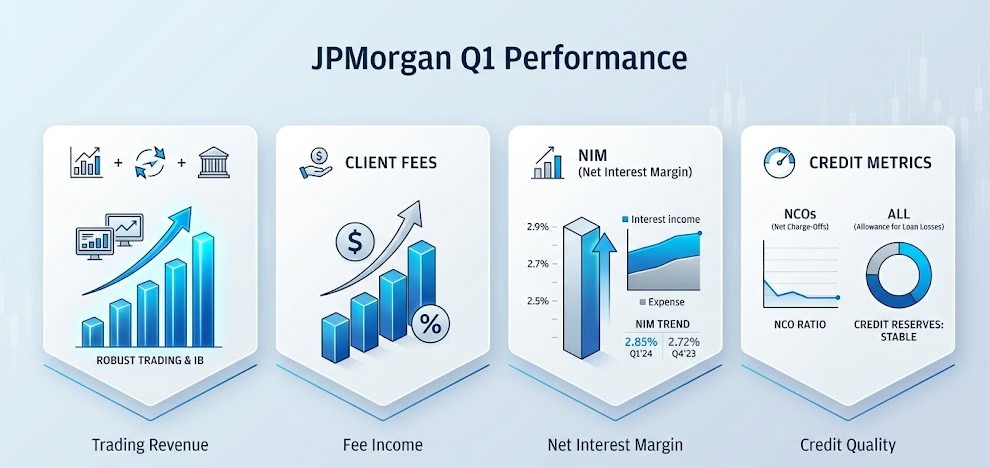
Net interest income remains a major focus for
investors. Elevated interest rates continue to support margins, although higher
deposit costs or weaker loan demand could create pressure moving forward.
Provision for credit losses will also be
closely monitored. If rising energy costs begin affecting repayment behavior or
delinquency trends, the bank may need to increase reserves, which would weigh
on earnings.
Other important metrics include:
- Trading
revenue growth
- Investment
banking fees
- Net
interest margin trends
- Consumer
loan performance
- Credit
card delinquency rates
- Reserve
build activity
Market
Reaction and Analyst Commentary
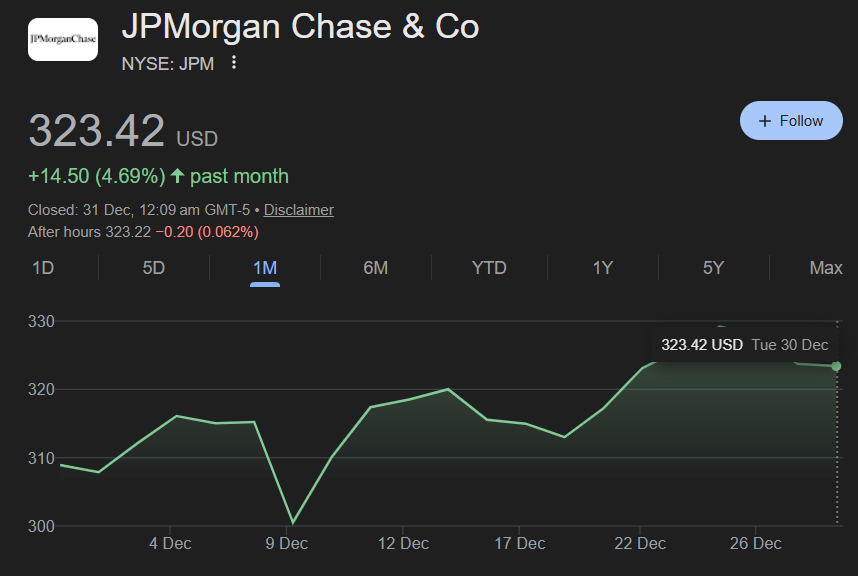
Financial stocks have traded unevenly ahead of
earnings as investors balance optimism around trading revenue against concerns
about weakening consumer health.
JPMorgan’s results are particularly important
because they often shape expectations for other major banks, including Bank of
America, Citigroup, and Wells Fargo.
Many analysts believe strong trading and
investment banking performance could drive earnings upside, though they caution
that any positive surprise must be large enough to offset rising operating
expenses and potential reserve increases.
Research commentary has also highlighted that
consumer stress linked to higher energy prices may emerge gradually, meaning
current results may not yet fully reflect longer-term credit deterioration.
What This
Means for Investors
Investors should pay close attention to the
quality and sustainability of revenue growth.
Trading and advisory revenue can fluctuate
significantly depending on market conditions, while stable net interest income
and healthy loan growth tend to provide more durable earnings support.
Monitoring consumer credit trends will be
critical, especially in credit card and auto loan portfolios that are more
vulnerable to rising living costs.
Management commentary on future deal
pipelines, expense controls, hiring trends, capital returns, and reserve
strategy will also play an important role in shaping investor sentiment.
Risk
Management and Positioning
Short-term traders may position for upside if
trading and investment banking revenue exceeds expectations, though earnings
volatility remains a key risk.
Unexpected reserve increases, weaker consumer
guidance, or softer outlooks for loan growth could quickly pressure bank
shares.
Long-term investors should focus less on
headline earnings beats and more on the durability of revenue streams, reserve
adequacy, and balance-sheet strength.
Conclusion
and Forward Looking Perspective
JPMorgan’s earnings report will serve as an
important indicator for the broader banking sector and the overall U.S.
economy.
Strong trading and investment banking
performance could reinforce confidence in fee-driven revenue growth, while
signs of weakening consumer credit conditions would highlight ongoing
macroeconomic risks tied to inflation and rising energy costs.
Over the coming quarters, investors should monitor whether capital-markets strength remains sustainable and whether consumer credit trends begin to deteriorate more meaningfully. That balance will likely determine the durability of JPMorgan’s earnings momentum and future shareholder returns.