Ford Motor Shares Hold Firm as Fundamentals Support Uptrend
Introduction
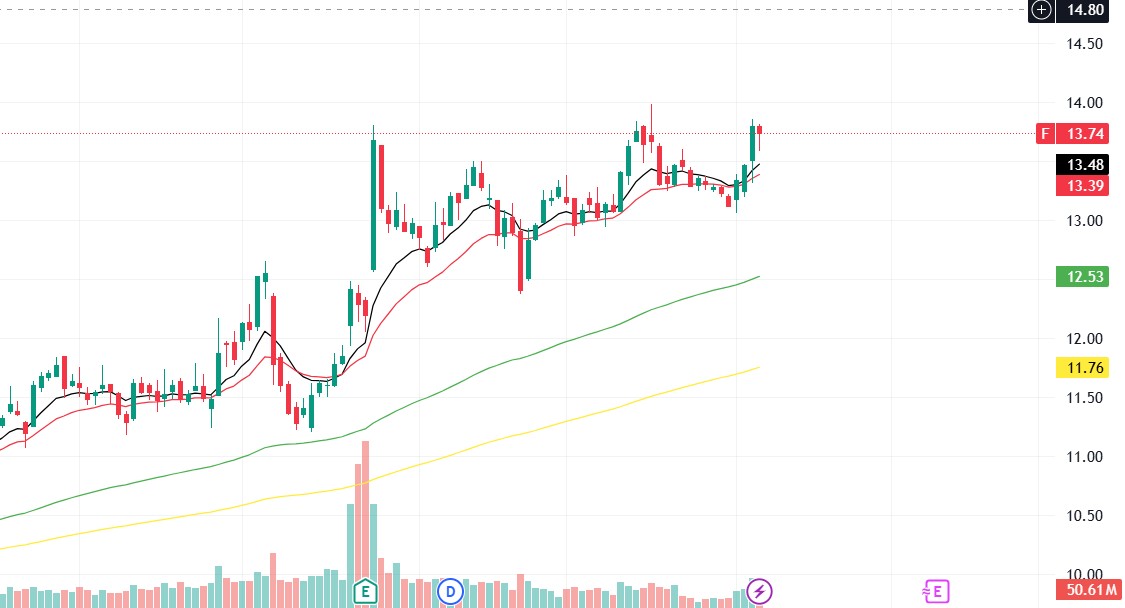
Ford Motor Company stock is drawing renewed
attention as it trades around the $13 level, supported by steady market
sentiment and improving business fundamentals. The broader equity market has
seen selective rotation into established industrial and manufacturing names,
particularly those with strong brand equity and global reach.
Ford remains in focus as investors reassess
legacy automakers adapting to changing industry dynamics, including electric
vehicles, cost restructuring, and evolving consumer demand. While the
automotive sector continues to face cyclical pressures, Ford’s positioning and
operational discipline are keeping the stock relevant for both fundamental
investors and trend-focused participants.
About the
Company
Ford Motor Company is one of the world’s
largest and most recognized automotive manufacturers, with operations spanning
North America, Europe, and key international markets. Founded over a century
ago, the company has built a strong legacy across passenger vehicles,
commercial trucks, and mobility solutions.
The company’s core business includes the
design, manufacture, and sale of cars, trucks, SUVs, and commercial vehicles
under the Ford and Lincoln brands. Ford also maintains a strong presence in
commercial fleets through its Ford Pro division, which provides vehicles,
software, and services to business customers.
With a diversified product lineup and a
globally established supply chain, Ford holds a significant position in the
traditional automotive market while continuing to invest in future-focused
mobility and electrification initiatives.
Why the
Stock Is in Focus
One of the primary reasons Ford shares remain
in focus is the company’s ongoing efforts to balance legacy operations with
forward-looking investments. Management has taken steps to improve operational
efficiency, streamline costs, and allocate capital more strategically across
its core and growth segments.
Another factor supporting attention on the
stock is Ford’s strong brand recognition and continued demand for its trucks
and commercial vehicles. Models such as the F-Series remain central to revenue
stability, helping offset volatility in other areas of the business.
Additionally, broader sentiment toward
value-oriented and fundamentally established companies has supported interest
in stocks like Ford, particularly as investors seek businesses with tangible
assets, pricing power, and long operating histories.
Trading /
Trend Perspective
From a market behavior standpoint, Ford shares
have shown signs of stabilizing after periods of volatility. Price action
reflects a gradual improvement in sentiment rather than speculative momentum,
aligning more closely with accumulation-driven moves than short-term trading
spikes.
The stock’s ability to hold key levels
suggests that investors are increasingly viewing current prices as reasonable
in relation to the company’s earnings potential and balance sheet strength.
While not immune to broader market swings, Ford’s trading pattern indicates
growing confidence among participants looking for steady upside exposure rather
than aggressive speculation.
This trend behavior supports the view that the
stock may continue to attract interest during periods of market consolidation
or selective risk-on sentiment.
Fundamental
Support
Ford’s fundamentals continue to provide a base
of support for the stock. The company benefits from diversified revenue streams
across consumer vehicles, commercial operations, and financing services. Its
commercial vehicle segment, in particular, offers relatively stable demand
compared to more discretionary passenger vehicle categories.
Financial discipline has also been a focus
area, with management emphasizing cost control, operational efficiency, and
disciplined capital allocation. These efforts aim to improve margins and reduce
earnings volatility over time.
In addition, Ford’s scale, supplier
relationships, and global distribution network provide resilience in a
competitive industry. While the automotive sector remains capital-intensive,
Ford’s established infrastructure and brand loyalty offer long-term strategic
advantages.
Risks to
Watch
Despite its strengths, Ford is not without
risks. The automotive industry is highly cyclical, and shifts in consumer
spending or economic conditions can directly impact vehicle demand.
The transition toward electric vehicles also
presents execution risk, as manufacturers must manage high investment costs
while navigating uncertain adoption rates and competitive pressure from both
traditional rivals and newer entrants.
Additionally, supply chain disruptions, labor
costs, and regulatory changes remain ongoing factors that could influence
profitability and operational performance.
Conclusion
Ford Motor Company remains a closely watched
stock as it trades near the $13 level, supported by solid fundamentals and
improving market confidence. The company’s ability to balance legacy strengths
with evolving industry demands continues to shape investor perception.
While challenges persist, Ford’s operational
scale, brand strength, and disciplined strategic approach provide a foundation
that supports a constructive outlook. For investors seeking exposure to an
established automaker with both fundamental backing and potential upside, Ford
remains a relevant name within the broader market landscape.
Disclaimer
This article is for informational and
educational purposes only and does not constitute financial, investment, or
trading advice. Stock market investments involve risk, and readers should
conduct their own research or consult a qualified financial advisor before
making any investment decisions. Past performance is not indicative of future
results.