Equinix Shares Dip Against Market Trend: Investor Outlook
Market
Snapshot
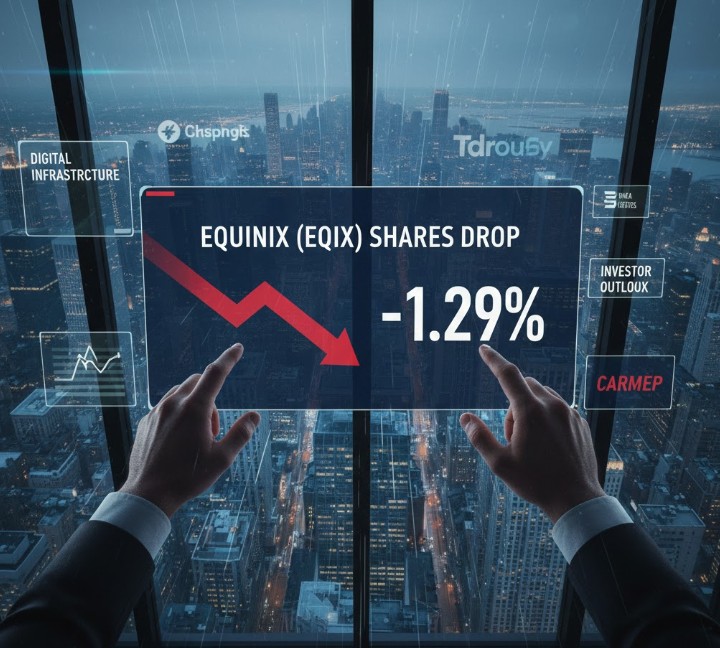
Equinix (EQIX) shares declined 1.29%,
closing at $810.38, underperforming a broadly higher market. While
modest in isolation, the move stood out given the positive market backdrop,
prompting closer attention from investors tracking valuation, sentiment, and
sector dynamics within digital infrastructure.
Company
Background and Recent Performance
Equinix is a global leader in digital
infrastructure and data center services, operating more than 260
International Business Exchange™ (IBX®) data centers across 71
metropolitan areas worldwide. Structured as a real estate investment
trust (REIT), the company provides colocation, interconnection, and digital
services that enable enterprises, cloud providers, and networks to connect
critical infrastructure with low latency and high reliability.
The company benefits from powerful secular
tailwinds, including:
- Accelerating
cloud adoption
- Growth
in artificial intelligence workloads
- Rising
data consumption
- Expansion
of edge computing
Equinix’s ecosystem-driven model supports high
customer retention and recurring revenue, contributing to a track record of
steady revenue growth and expanding profitability. Its REIT structure and
dividend profile have further broadened its appeal among both growth-oriented
and income-focused investors. Over time, EQIX shares have generally reflected
this fundamental strength, often outperforming broader indices during periods
of strong demand for digital infrastructure.
Analysis of
the Price Move and Its Implications
The 1.29% decline occurred without a
clear negative company-specific catalyst, suggesting the move may reflect
short-term market dynamics rather than a shift in fundamentals.
Potential contributing factors include:
- Profit-taking,
particularly following periods of strong performance
- Valuation
reassessment, as Equinix typically trades at a
premium due to its market leadership and consistent growth
- Sector
or capital rotation, with investors reallocating funds
toward areas perceived to have more immediate upside
Importantly, this type of daily fluctuation is
not unusual for high-value growth stocks and does not, on its own, indicate
deterioration in Equinix’s long-term outlook.
Market
Reaction and Analyst Perspective
Investor reaction to the decline appeared
measured. Long-term institutional holders generally place greater emphasis on
fundamentals than single-session price movements.
Analyst sentiment toward Equinix remains
largely constructive, with continued focus on:
- The
company’s strategic global asset base
- Strong
customer relationships and retention
- Ongoing
capacity expansion and new builds
- The
essential role of interconnection in the global digital economy
Many analysts view minor pullbacks as
potential accumulation opportunities, particularly given the multi-year growth
cycle expected for digital infrastructure.
What This
Means for Investors
- Existing
shareholders: The dip is not, by itself, a signal for
concern. Focus should remain on earnings performance, expansion progress,
demand trends, and capital allocation.
- Prospective
investors: The decline may offer a modest entry
point for those with a long-term view on cloud computing, AI, and digital
transformation.
- Risk
considerations: As a REIT, Equinix remains sensitive to
interest rates, capital expenditure requirements, competitive pressures,
and regulatory environments.
Disciplined strategies such as dollar-cost
averaging may help mitigate short-term volatility while maintaining exposure to
long-term growth drivers.
Conclusion
Equinix’s slight pullback amid a rising market
highlights the nuanced nature of equity price movements, particularly for
premium-valued growth stocks. While the 1.29% decline may reflect
profit-taking or valuation adjustments, it does not alter the company’s strong
strategic positioning within the global digital infrastructure ecosystem.
With durable secular tailwinds and a business
model deeply embedded in the digital economy, Equinix’s long-term investment
narrative remains intact. Short-term divergences such as this often serve less
as warning signs and more as opportunities for reassessment and strategic
positioning.