Buying Vanguard Information Technology ETF During Nasdaq Dip

Vanguard
Information Technology ETF (VGT): Is the Nasdaq Correction Creating a Buying
Opportunity?
The recent Nasdaq correction has brought
renewed attention to the Vanguard Information Technology ETF (VGT), as
declining technology stock prices have created a potential entry point for
long-term investors.
The pullback has reignited debate over whether
now is the right time to gain concentrated exposure to the technology sector or
whether further downside remains possible.
VGT
Provides Focused Exposure to Technology Leaders
VGT is Vanguard's technology-focused
exchange-traded fund, offering investors concentrated exposure to major U.S.
information technology companies.
Its portfolio is heavily weighted toward
industry leaders in:
- Software
- Semiconductors
- Digital
infrastructure
- Technology
services
The fund includes significant positions in
companies such as Apple, Microsoft and NVIDIA, making it one of the most
popular vehicles for targeted technology investing.
With a low expense ratio of 0.10%, VGT has
attracted substantial investor assets while benefiting from long-term trends
including cloud computing, artificial intelligence and digital transformation.
Nasdaq
Pullback Has Pressured Technology Valuations
The recent decline in technology stocks has
been driven by several factors:
- Rising
Treasury yields
- Profit-taking
after an extended rally
- Investor
concerns about elevated valuations
Because VGT is concentrated in high-growth
technology companies, it often experiences larger price swings than the broader
market.
During market downturns, the ETF typically
declines more than the S&P 500, but it has also historically participated
strongly in technology-led recoveries.
For investors, the key question is whether the
correction represents a temporary valuation reset or signals deeper challenges
for future earnings growth.
Market
Sentiment Has Become More Selective
Recent market activity suggests investors are
becoming increasingly selective within the technology sector.
ETF inflows into technology-focused funds have
moderated, while volatility has increased as investors reassess growth
expectations.
Analysts generally distinguish between
different segments of the industry:
- Semiconductor
companies benefiting from AI infrastructure demand may continue to see
strong earnings growth.
- Some
software businesses and consumer internet companies could face greater
cyclical pressure if economic conditions weaken.
Many strategists believe diversified
technology ETFs like VGT provide an efficient way to participate in sector
growth while reducing company-specific risk compared with individual stock
selection.
Valuation
Remains the Key Investment Question
Technology companies typically trade at higher
valuation multiples than the broader market because investors expect stronger
future growth.
The recent correction has lowered entry prices
and may improve long-term return potential, but investors should also consider
scenarios where:
- Revenue
growth slows
- Interest
rates remain elevated
- Valuation
multiples compress further
- Earnings
expectations prove too optimistic
A disciplined assessment of future growth
assumptions is essential before increasing exposure.
Investment
Strategies for Different Time Horizons
Long-Term
Investors
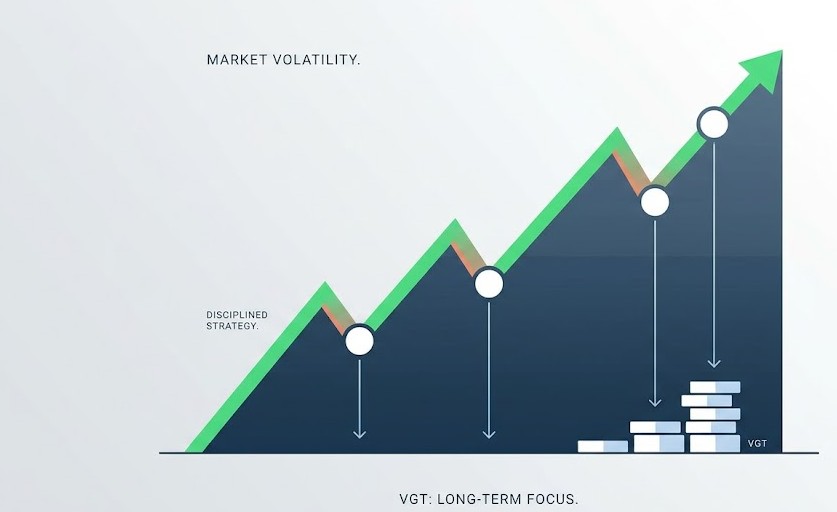
Dollar-cost averaging into VGT over time can
help reduce the impact of market volatility while gradually building exposure
at potentially more attractive prices.
Short-Term
Traders
Active traders should focus on:
- Position
sizing
- Stop-loss
strategies
- Risk
management rules
- Monitoring
technical support levels
Technology ETFs can experience significant
short-term price swings that require disciplined trading plans.
Portfolio
Diversification
Even investors with a positive outlook on
technology should avoid excessive concentration.
Pairing VGT with:
- Broad
market index funds
- Value-oriented
investments
- Other
sector allocations
can reduce overall portfolio risk while
maintaining exposure to long-term innovation trends.
Scenario
Analysis
Base Case
If economic growth remains stable and
investment in artificial intelligence continues to accelerate, VGT could
recover more quickly than the broader market as technology earnings improve.
Downside
Case
If interest rates stay elevated for longer and
economic activity slows, valuation multiples could compress further, delaying a
sustained recovery despite solid long-term fundamentals.
Investors should stress-test expected returns
under different revenue growth and valuation assumptions before determining
appropriate position sizes.
Practical
Portfolio Implementation
Several approaches may help manage risk while
maintaining exposure:
- Build
positions gradually over several weeks or months.
- Rebalance
periodically to maintain target allocations.
- Consider
covered call strategies if elevated volatility persists.
- Keep
VGT as part of a diversified portfolio rather than a standalone
investment.
Tax-conscious investors may also find
opportunities for tax-loss harvesting during periods of market weakness.
Comparing
VGT With Other Technology ETFs
Compared with alternatives such as Invesco QQQ
and XLK, VGT offers concentrated exposure specifically to the information
technology sector while maintaining relatively low costs.
QQQ includes a broader mix of Nasdaq-listed
companies beyond technology, while XLK provides another large-cap
technology-focused approach with different portfolio construction.
Investors should compare:
- Expense
ratios
- Index
methodology
- Portfolio
concentration
- Liquidity
- Tax
efficiency
before selecting the most appropriate vehicle.
Conclusion
The recent Nasdaq correction has created a
lower-cost entry point into VGT, potentially improving long-term opportunities
for patient investors who believe in the continued growth of the technology
sector.
However, the ETF's concentration in
high-growth companies means it carries both greater upside potential and
increased downside risk during periods of market volatility.
For disciplined investors, combining gradual
accumulation, portfolio diversification and long-term conviction may provide
the most effective approach to benefiting from future technology-driven growth
while managing near-term uncertainty.
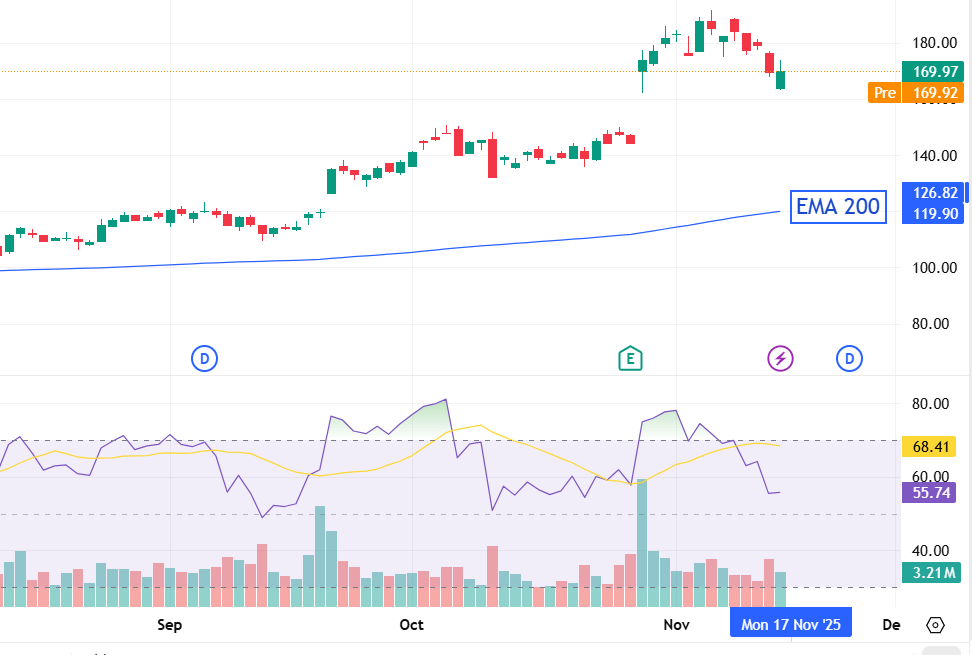
VGT declined alongside the broader Nasdaq as rising Treasury yields, profit-taking and renewed concerns over elevated technology valuations weighed on high-growth stocks and prompted investors to reassess sector exposure.